 CubanWaterLab
ESENFR
CubanWaterLab
ESENFR
CubanWaterLab
ESENFR
CubanWaterLab
ESENFR
Four PhD candidates — three in the exact sciences and one in social sciences — carry the project's day-to-day work, alongside the binational coordination, a network of associated researchers, and a wide group of collaborators in Cuba and Belgium.
Center for Complex Systems, University of Havana
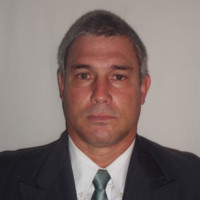
Ernesto Altshuler Álvarez graduated summa cum laude from the Physics Faculty, University of Havana in 1986 (Diploma thesis on magnetic materials). He defended his PhD in 1994 (Thesis on superconducting materials).
He is professor of Physics at the Physics Faculty, University of Havana. For decades, he has done scientific research also in the fields of granular matter, dynamics of social insects, bacterial motility, porous materials and fluid dynamics. This diversity of fields has involved some bizarre experimentation[1][2][3].
Lately, he has been co-heading a Cuba-Belgian ARES project related to the creation of instruments for in situ monitoring of water quality in Cuban bays, which has little to do with his previous research experience — but perhaps with his amateur snorkeling experience.
Prof. Altshuler has been appointed as invited researcher at the Texas Center for Superconductivity (Houston, Texas, USA), the ESPCI (Paris, France), the Norwegian Academy of Sciences and Letters (Oslo, Norway), and the Rockefeller University (New York, USA) among others. His scientific activity has often been featured (see, for example[4]). He is Editor in Chief of the Cuban Journal of Physics[5], as well as a member of the editorial board of Granular Matter. Prof. Altshuler is a Fellow of the World Academy of Sciences (Trieste, Italy).
He has authored several books on science popularization and the history of science, such as Guerrilla Science: survival strategies of a Cuban physicist (Springer, 2017)[6]. His book "A Different Kind of Splash" will also be published by Springer within the next months, by the way.
Among his hobbies are guitar playing (and composition), cartoon drawing, writing short stories, caregiving of the elderly, plumbing, car fixing, tasteless cooking, and a dangerously long etcetera performed with different levels of love, audacity and mediocrity. He is also an avid science communicator, where his professional training and hobbies merge with an omnipresent (sometimes vitriolic) sense of humor[7].
He is supposed to be the propulsion force behind the most lovely statue of Albert Einstein ever made[8].
Université Libre de Bruxelles
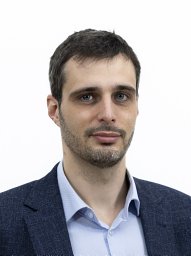
Denis Terwagne holds a PhD in Fluid Mechanics from the University of Liège (2011) and was a postdoc at MIT working on solid mechanics and mechanical instabilities. He is now Assistant Professor of Physics at the Université Libre de Bruxelles, where he directs the Frugal Lab at Fab Lab ULB, researching soft matter, elasticity of thin structures, and fluid-structure interactions.
FLACSO, Universidad de La Habana
Geydis Fundora Nevot is a sociologist and Assistant Professor at FLACSO-Cuba, where she directs the journal Estudios del Desarrollo Social: Cuba y América Latina. Her research focuses on social policy, inequality, gender, and intersectionality in Cuban development.
Université Catholique de Louvain
Florence Degavre is a socio-economist and Professor at UCLouvain (IACCHOS), researching social economy, care work, and social innovation from a feminist perspective. She also serves as the Rector's Advisor for Gender, Equality and Inclusion at UCLouvain.
Université Libre de Bruxelles
Stamatios Nicolis is a senior researcher at ULB's Center for Nonlinear Phenomena and Complex Systems, studying self-organization and collective behavior in biological and artificial systems through mathematical modeling, stochastic processes, and AI-assisted image analysis.
Université Libre de Bruxelles
Alexandre Campo is a senior researcher at ULB's Biological & Artificial Self-organized Systems lab (BASS), specializing in swarm robotics, swarm intelligence, and collective behavior in biological and artificial systems.
IMRE, Universidad de La Habana
Dr. Aramis Rivera is a senior researcher at the Institute of Materials and Reagents (IMRE), University of Havana. Since the late 1990s she has worked in materials science on zeolites, and later on clays, with applications in medicine and the environment, using a range of physicochemical analysis techniques. Her extensive experience lets her contribute to aspects of the project involving not only materials analysis but also the analysis of contaminated water samples from Cuban bays, as well as cooperating in the evaluation of some in situ measurement equipment.
Frugal Lab, Université Libre de Bruxelles
Axel Cornu is the electronics technician at the Frugal Lab / Fab Lab ULB, working alongside Denis Terwagne since 2014. A FabAcademy 2019 graduate, he supports the project's hardware development in Brussels.
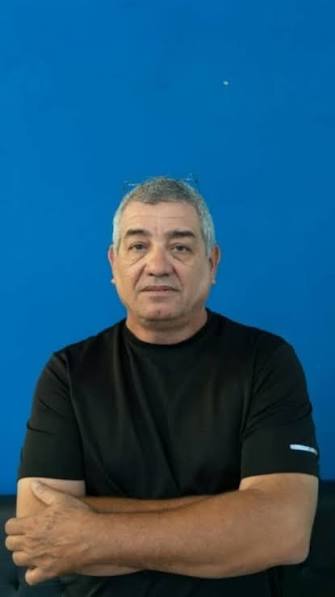
Espoleta Tecnologías
Orestes Chávez Linares is a hardware engineer at Espoleta Tecnologías, contributing to the buoy electronics and communication systems.

Cimab
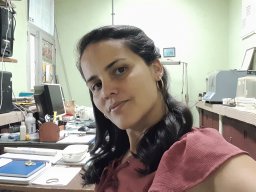
Marlen Pérez Hernández (Havana, Cuba, 1970) holds a degree in Physics from the University of Havana (1993) and a Master’s in Environmental Impact and Protection from the Higher Institute of Applied Sciences and Technologies (2001). She is an Auxiliary Researcher and a specialist in marine-coastal water environmental quality.
She is currently Deputy Director of the Transport Environmental Research and Management Center (Cimab), and coordinates Cimab’s activities and projects as a Regional Activity Center of the Protocol Concerning Pollution from Land-Based Sources and Activities of the Cartagena Convention. She has led several national projects on monitoring the environmental quality of Cuba’s main bays, including Havana Bay, and has collaborated on regional projects on the marine environmental status of the Wider Caribbean Region and its tributary pollution sources, always in collaboration with the Secretariat of the Cartagena Convention of the United Nations Environment Programme.
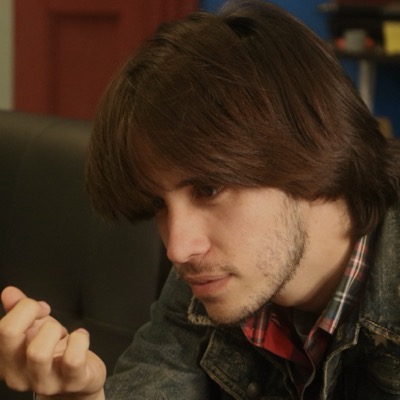
Instrumentation, buoys, and spectrophotometry.
Alex M. Rivera Rivera is an Automation Engineer (CUJAE, 2023) and co-founder of ESPOLETA Tecnologías, the Cuban startup behind Vórtice, Cuba's first commercially produced weather station. He now runs two parallel PhD programs — Physics at the University of Havana and Engineering and Technology at the Université Libre de Bruxelles — both centered on environmental sensing and water-quality monitoring within CubanWaterLab, and has authored five peer-reviewed publications spanning fluid dynamics, open hardware, and robotics.
He documented his path through ULB's FabAcademy in 2024, and keeps a fuller record of his work at alexmanuelrivera.com.
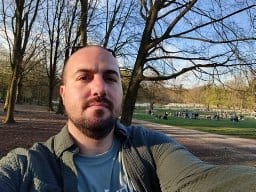
Wave channel.
Luis Abel Rodríguez de Torner holds a degree in Education, specializing in Mathematics-Physics, from the Enrique José Varona University of Pedagogical Sciences, where he also earned a diploma in Higher Education Didactics, and completed four years of Automation Engineering at Cujae. He holds a Master's in Physical Sciences from the Faculty of Physics, University of Havana, with a thesis on the application of Kalman filters to fluid-dynamics experiments. He is also a graduate of the international Fab Academy 2024 program, where he developed the project Making a Wave Flume.
He is currently pursuing a joint PhD between the University of Havana (PhD in Physical Sciences) and the Université Libre de Bruxelles (PhD in Engineering and Technology). Professionally, he spent five years as an instructor professor of Physics in the Mathematics-Physics department of his alma mater, and currently serves as assistant professor of General Physics and Electronics at the Faculty of Physics, University of Havana.
His main research lines span experimental physics, experimental fluid dynamics — with an emphasis on the design and construction of wave channels — and computational fluid dynamics using DualSPHysics.
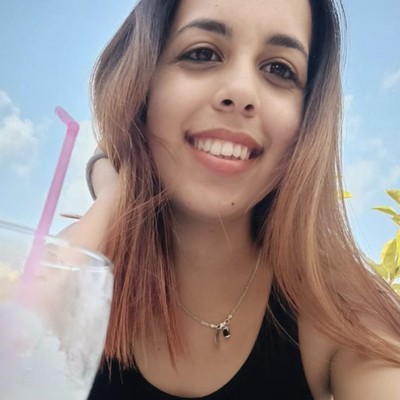
Biosensors, AI, and spectrophotometry.
Daniela Martínez-Ortiz works at the Center for Complex Systems, University of Havana, where she develops low-cost spectrophotometers and AI-based tools for detecting biological contaminants in marine water. She is first author of a review on artificial intelligence for detecting marine biological pollutants, and completed her categorization as an instructor professor in 2026.
Social sciences, social innovation, and the Casablanca community.
Mayelín García Remus is a PhD candidate in Social Sciences (University of Havana / UCLouvain) researching social innovation and community water-quality governance in the Casablanca neighborhood of Havana Bay. She is currently on a research stay at UCLouvain's CIRTES center in Louvain-la-Neuve.